


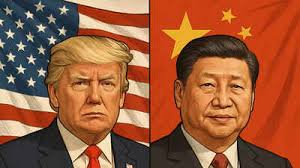
Tariff Breakdown – Who Got Hit Hardest?
Four African countries — Libya, South Africa, Algeria, and Tunisia — now face tariffs as high as 30% under the Trump administration’s recalibrated trade policy. Another 18 countries have been slammed with 15% tariffs, all of which drastically reduce the competitiveness of African goods in the American market.
The rationale from Washington? “Reciprocity.” But critics, including African economists and U.S. analysts, argue that the tariffs are less about fairness and more about political signaling. Rather than being based on import-export parity, these tariffs were applied according to the U.S.’s trade deficits with each country — a metric that disadvantages smaller, less diversified economies.
Real-World Impacts: From Citrus to Denim
In Lesotho, one of Africa’s smallest and most trade-dependent nations, the consequences have been catastrophic. A 15% tariff has replaced a previous 50% levy, but that’s done little to save the country’s export-driven textile industry, which once thrived under duty-free access through the now-eroded U.S. Africa Growth and Opportunity Act (AGOA).


Lesotho’s Prime Minister Samuel Matekane declared a two-year national state of disaster, citing mass factory closures and job losses in the tens of thousands. Trade with the U.S. totaled $240 million last year, a massive sum for a country of just over 2 million people.
In South Africa, the situation is no better. Citrus growers have warned of “certain job losses” due to the tariffs, with hundreds of thousands of cartons of fruit now unsellable. The automobile sector is equally vulnerable, with major manufacturers contemplating exit strategies amid collapsing exports.
China Seizes the Opportunity
Beijing’s Rapid Response
China wasted no time positioning itself as Africa’s new best friend. In June, Beijing announced that it would remove tariffs on imports from nearly all African trading partners, a move interpreted widely as a geostrategic counter to Washington’s isolationist stance.
“We are going straight into the hands of China,” said Nigerian economist Bismarck Rewane, calling the shift “the unfortunate outcome” of U.S. protectionism.
China has long been Africa’s largest bilateral trading partner, and these tariffs accelerate the momentum. With Africa looking for alternatives, China’s offer is too convenient to ignore.
The Growing Risk of Dependency
But not everyone is celebrating. Experts caution that replacing one superpower with another — especially one with an imbalanced trade record — may come at a long-term cost.
Neo Letswalo, a South African economic researcher, warns:
“If African nations don’t protect emerging industries, Chinese products will flood and outcompete local businesses.”
China’s trade with Africa often favors manufactured exports from Beijing and raw material imports from Africa, locking the continent into a subordinate economic role.
Missed Opportunities and Diplomatic Blind Spots
U.S. Exclusion and Silence
What angers African leaders even more than the tariffs is the lack of negotiation. The U.S. did not sign any trade deal with any African nation in the lead-up to the tariff deadline — a move perceived as deliberate neglect.
“It’s an open goal for China,” said Letswalo, emphasizing that while Africa tried to secure continued access, the U.S. administration was uninterested.
Even South Africa’s Citrus Growers’ Association stressed that while China is an important option, “the U.S. market remains a priority.” U.S. consumers have a strong appetite for South African products — citrus exports have doubled since 2017.
The Bigger Picture: Rewriting Africa’s Trade Future
AfCFTA – The Continental Lifeline
Amid the geopolitical turmoil, the African Continental Free Trade Area (AfCFTA) represents the most promising homegrown solution. Designed to foster intra-African trade, the pact was signed in 2020 but has seen slow adoption, with just over 20 out of 55 nations currently trading under its framework.
If effectively implemented, AfCFTA could:
-
Reduce Africa’s dependence on global superpowers.
-
Strengthen regional supply chains.
-
Foster industrial growth from within the continent.
Rewane believes the U.S. tariffs may ironically catalyze economic independence in Africa, pushing countries to become “more inward-looking rather than outward-dependent.”
Strategic Takeaways for CEOs and Policymakers
-
Tariffs are not neutral tools. Their unintended consequences can shift entire geopolitical landscapes, often against a nation’s strategic interest.
-
U.S. disengagement is China’s opportunity. If Washington fails to engage with African leaders, it cedes influence to Beijing — likely permanently.
-
Diversification is no longer optional. African economies must urgently broaden their export bases and reduce reliance on singular markets.
-
AfCFTA could be the game-changer. African governments, multinationals, and regional blocs must prioritize its full implementation.
The Trump administration’s tariffs have sparked a new chapter in global trade, one that is not necessarily favorable to the United States. Africa, a region with immense untapped potential, now looks East for opportunity. For China, the path is clear — become Africa’s top trade and strategic partner. For the U.S., the message is even clearer: engage now or risk irrelevance.

