


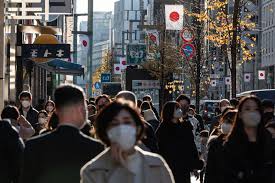
A Nation in Decline – The Numbers Tell a Grim Story
Japan’s population decline has officially hit a historic low. In 2024, the country lost more than 900,000 people, marking the largest annual drop on record, according to data released by Japan’s Ministry of Internal Affairs and Communications. The number of Japanese nationals fell by 908,574, bringing the total population to just over 120 million.
This trend isn’t new. Japan has been experiencing population shrinkage for 16 consecutive years, down from a peak of 126.6 million in 2009. But what’s different now is the scale and speed of the collapse—posing deep risks for the country’s social fabric, economy, and global competitiveness.
The Aging Dilemma: Fewer Births, More Deaths
Japan’s Youth Crisis
The key driver? Japan is rapidly becoming one of the oldest nations in the world. Nearly 30% of the population is now aged 65 or older, while only 59% of the population falls into the working-age category (15–64 years), well below the OECD average of 65%.


In 2024, the country saw just 687,689 births—the lowest number since records began in 1968. Meanwhile, deaths hit nearly 1.6 million, the highest ever recorded. This isn’t just a demographic statistic—it’s a social tipping point.
Japan’s fertility rate has remained below replacement level since the 1970s. Even if the birthrate were to miraculously recover tomorrow, the demographic structure is so skewed that the country would still face decades of population contraction.
The Domino Effect on Society and the Economy
Shrinking Workforce, Strained Systems
Japan’s dwindling population has direct implications for its economy, public infrastructure, and national security. A smaller workforce means lower productivity, declining tax revenues, and greater strain on public pensions and healthcare systems designed for a younger, growing population.
Public services—from schools to transport networks—are already feeling the pinch, especially in rural areas where some communities haven’t seen a single birth in decades.
For CEOs and business leaders, the long-term consequences are profound:
-
Labor shortages across industries, from manufacturing to eldercare.
-
Rising wage pressure as talent becomes scarce.
-
Declining domestic market size, especially in sectors like retail, real estate, and childcare.
Cultural and Structural Challenges to Reversing the Trend
Why Young Japanese Aren’t Having Children
The reasons for the decline are complex and rooted in culture, economics, and social norms:
-
High cost of living and cramped urban environments.
-
Stagnant wages despite rising inflation.
-
Long working hours and a demanding work culture.
-
Limited childcare support and gendered expectations around parenting.
While the government has attempted to respond with childbirth subsidies, housing incentives, and paternity leave programs, these have yet to make a meaningful dent in the trend.
In Japanese society, marriage remains closely linked to childbirth, and the concept of single parenthood is less socially accepted than in Western nations. Women are often pressured to leave the workforce after marriage or childbirth, making parenthood an economic risk.
Immigration: The Uncomfortable but Necessary Solution?
A Nation Warming to Diversity?
Historically, Japan has maintained a strict immigration policy, emphasizing cultural homogeneity. However, this stance is slowly shifting in the face of demographic crisis.
The government has:
-
Introduced a “digital nomad” visa to attract skilled foreign workers.
-
Launched training and upskilling programs for foreign residents.
-
Increased efforts to retain foreign students and technical interns.
These efforts appear to be yielding results. In 2024, the number of foreign residents rose by more than 10% to a record 3.6 million, signaling a potential demographic buffer against the native population decline.
While still a politically sensitive issue, immigration may be Japan’s only viable short- to mid-term lever for maintaining a sustainable workforce.
What the Future Holds: A Smaller, More Diverse Japan?
According to government forecasts revised in 2023, Japan’s population is expected to fall by 30% by 2070. The silver lining? Analysts expect the pace of decline to slow, thanks to international migration.
For Japan to survive and thrive in the next half-century, it will likely have to:
-
Redesign its immigration framework to attract global talent.
-
Modernize workplace practices to retain women and younger workers.
-
Reframe its cultural narrative around family, work, and identity.
If not, the country risks fading into economic stagnation and geopolitical irrelevance.
A Moment of Reckoning
Japan’s record-breaking population decline is more than a national crisis—it’s a global case study in the long-term costs of delayed demographic planning. The world is watching as Japan attempts to engineer a turnaround that blends policy reform, social innovation, and cultural adaptation.
For business leaders, investors, and policymakers, this isn’t just a story about Japan—it’s a preview of what many aging societies may soon face. The real question isn’t whether Japan can change—but whether it can do so fast enough.

